
AMD’s EPYC Processors Shine at the 8th China International Import Expo
Summary:
- AMD showcases its EPYC processors at the CIIE, emphasizing AI empowerment and energy efficiency.
- The fifth-generation EPYC processors offer unparalleled performance with advanced manufacturing technology.
- AMD’s commitment to sustainable computing solutions is evident through its innovative power management capabilities.
The 8th China International Import Expo (CIIE), held in Shanghai from November 5 to 10, spotlighted the theme "AI Empowerment, Planting New Consumption." Covering 430,000 square meters, the event welcomed 4,108 international companies from 155 countries, presenting a grand platform for innovation and industry trends.
As a global leader in high-performance computing, AMD has been a steadfast participant in the CIIE for five consecutive years. This year, AMD highlighted a full spectrum of AI chips and solutions that cater to cloud, edge, and device computing needs. Their showcase included an impressive range of products, from servers and workstations to mini AI workstations and AI-driven PCs.
EPYC: The Crown Jewel of AMD’s Product Line
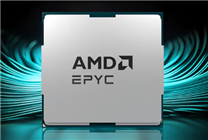
Among AMD’s offerings, the fifth-generation EPYC processors stood out as a significant milestone in the realm of server technology. Since its inception in 2017, EPYC has been a frontrunner, steering the development of servers and data centers while earning widespread acclaim from industry leaders.
The latest iteration of EPYC leverages cutting-edge 3nm and 4nm manufacturing technologies alongside the powerful Zen 5 architecture, boasting features such as a remarkable 192 cores and 384 threads, clock speeds of up to 5 GHz, and an expansive 512 MB level 3 cache. With twelve channels supporting 6 TB of DDR5-5600 memory and 128 PCIe 5.0 lanes, EPYC sets an unprecedented standard in the industry.
With the surge of AI across various sectors, AMD EPYC is exceptionally well-suited to meet the demands of today’s computing workloads. The architecture has achieved groundbreaking advancements in performance density and energy efficiency, making it an ideal choice for AI-driven applications, high-performance computing (HPC), cloud services, and mobile communications.
High Performance Meets Energy Efficiency
The EPYC architecture supports AVX-512 instructions, which allow for efficient parallel processing crucial for AI inference workloads. This scalability enables the new generation of EPYC processors to deliver up to twice the inference throughput compared to their predecessors.
Additionally, the architecture’s enhanced memory channels and PCIe 5.0 support facilitate higher I/O throughput, which is vital for swift data access and communication between CPUs and GPU accelerators—key components in AI workloads.
AMD’s ZenDNN 5.0 library further optimizes AI inference capabilities, featuring automatic tuning algorithms and supporting various AI frameworks including TensorFlow, PyTorch, and ONNXRuntime. This ensures significant compatibility with open-source initiatives, making it an attractive choice for developers.
Moreover, AMD EPYC processors boast impressive energy efficiency metrics. The latest design achieves a remarkable 192 cores and 384 threads with a power consumption of only 500W—averaging just 2.6W per core. Such efficiency significantly enhances performance while staying aligned with global sustainability goals.
Sustainable Computing Solutions
Power consumption and heat generation are prominent challenges faced by modern AI data centers, which necessitate sophisticated power and cooling systems. AMD EPYC is designed to address these issues effectively, combining high-performance capabilities with energy-efficient operations.
The Zen 5c architecture’s efficiency translates to substantial energy savings, enabling the processing of workloads with reduced energy consumption. Further, advanced I/O features, such as PCIe 5.0, help lower both hardware costs and power demands within data centers.
Innovative power management technologies like AMD Infinity Power Management allow dynamic adjustments to power levels based on workload, minimizing overall energy consumption. This ensures that AI infrastructures can operate at peak performance while keeping costs in check.
By utilizing fifth-generation AMD EPYC processors, organizations can effectively reduce the number of needed server racks while maintaining comparable performance levels. This not only translates into considerable savings on physical space and energy consumption but also reduces overall operational costs and enhances sustainability.
Empowering the Future of AI and Green Technology
During this year’s CIIE, AMD presented 16 benchmark cases showcasing the capabilities of its EPYC processors in various cloud service and enterprise applications. By integrating these solutions with OEM partners, AMD aims to assist data centers in enhancing performance and energy efficiency while optimizing total cost of ownership.
The fifth-generation EPYC series exemplifies a balance between robust performance and high energy efficiency, establishing a new benchmark for the AI era. As data center performance demands continue to escalate, the AMD EPYC processors stand out as a sustainable pillar of computing power, reinforcing a commitment to intelligent upgrades and environmental responsibility.
In conclusion, AMD’s EPYC processors not only deliver exceptional performance but also align with the broader vision of sustainable development, making them indispensable in today’s rapidly evolving technological landscape.