
Huawei Mate 70 Air: Redefining the Concept of Thinness
- Huawei launches the Mate 70 Air, labeled as the “thinnest Mate ever”.
- The device balances an ultra-thin profile with a large screen and impressive battery.
- Rather than an all-round flagship, it’s a strategic product targeting specific user needs.
In an unexpected move, Huawei has introduced the Mate 70 Air, touted as the “thinnest Mate in history.” Unlike many smartphone launches that rely on grand press conferences, Huawei took a stealthy approach, making the product available for pre-sale without prior fanfare or hype.
Industry insiders were caught off guard. Typically, even the most secretive product releases leave traces, but Huawei has managed to maintain a shroud of secrecy around this launch. This isn’t a novel approach for the company; its previous Mate 60 series similarly bypassed traditional launch methods.
Before you decide whether to add this new device to your collection, let’s take a closer look at Huawei’s intentions behind the Mate 70 Air. It’s essential to clarify a common misconception: the “Air” in Mate 70 Air signifies a different concept than what you might associate with Apple’s Air series, which emphasizes extreme lightness and minimalism.
Instead, this phone emerges as a “quasi-all-around flagship.” The sleek 6.6mm body skillfully contains a generous 7-inch display, a robust imaging system, and an impressive 6500mAh battery. However, it walks a fine line between thinness and functionality—an inherent challenge in smartphone design.
The smartphone industry often grapples with the “impossible triangle”: achieving ultra-thin design, extended battery life, and comprehensive functionality. Manufacturers frequently compromise on key features in pursuit of slimness, resulting in smaller batteries, fewer lenses, and inadequate heat dissipation. Apple’s iPhone Air serves as a prime example, showcasing a sleek design that sacrifices battery capacity and camera capabilities.
Huawei’s Mate 70 Air takes a unique stance: it prioritizes thickness to support advanced features while still maintaining a relatively slim profile. Weighing in at 208 grams, it’s thicker than many competing models like the iPhone Air and Samsung’s S25 Edge, but it offers a full suite of high-performance components. This deliberate choice opens the door for enhanced configuration options that, while adding weight, ultimately support better performance.
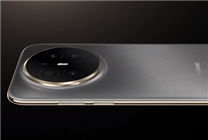
The phone’s design might remind some users of a “wide straight screen” as it integrates a complete camera system, including a 50-megapixel OIS main camera, a 12-megapixel OIS telephoto lens, an 8-megapixel ultra-wide-angle macro lens, and a 1.5-megapixel multi-spectrum sensor. This robust imaging setup is designed to outperform many lightweight competitors.
In addition to its impressive camera array, the Mate 70 Air provides multiple functionalities, including IP68/IP69 water and dust resistance, dual speakers, Beidou satellite messaging, NFC capabilities, and infrared control. Unlike some modern devices, it maintains a physical SIM card slot—an essential feature for many users.
While Huawei has made sacrifices in other areas to achieve its refined design—such as shifting from a metal frame to a high-strength composite material, downgrading the vibration motor, and integrating fingerprint recognition into the power button—it still includes features like stylus support, making it versatile for users interested in note-taking or drawing.
The Mate 70 Air presents a smart product definition that caters to a niche segment within the market. Although it may not satisfy users who prioritize one-handed operation and extreme portability, it is an excellent choice for those who seek a larger display and extended battery life for media consumption, document signing, and note-taking.
Performance-wise, the Mate 70 Air is powered by two configurations: the Kirin 9020B with 12GB of RAM and the Kirin 9020A with 16GB. Prices range from 4,199 to 5,199 yuan, with expectations that the 9020A will offer superior performance, although real-world testing will ultimately dictate the differences.
In summary, while the Mate 70 Air may not be marketed as a flagship powerhouse, it represents a clever reimagining of smartphone design that targets specific user preferences—specifically those who appreciate visual immersion and long battery life despite a wider and heavier device. For users who know what they want, the Mate 70 Air could indeed provide the perfect balance of features.