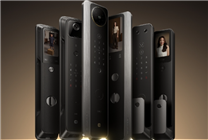

The Future of Smart Door Locks: Market Insights and Industry Leaders
Summary
- The smart door lock industry is projected to reach 17.81 million units sold by 2025, reflecting a 2.0% increase year-on-year.
- A national subsidy policy in 2024 will support the market by subsidizing smart locks by 15%-20%, effectively stimulating existing replacement demand.
- Top brands like Xiaomi, Deschmann, and Caddis are set to dominate sales, accounting for 28.3% of the market share.
The smart door lock industry is on the brink of significant growth, with projections indicating that omni-channel sales will reach 17.81 million units by 2025. This marks a modest year-on-year increase of 2.0% for 2024, according to data analysis. The introduction of a national subsidy program in 2024 is expected to play a pivotal role in stimulating market demand. By offering subsidies between 15% to 20% on smart door locks, in conjunction with local consumption coupons, consumers will be encouraged to replace existing locks, thereby unlocking additional market potential.
Industry Leaders and Market Dynamics
Leading Brands in Sales
Research indicates Xiaomi, Deschmann, and Caddis will remain the top three market players by 2025, together commanding 28.3% of the total sales share. This trend reveals a continuation of an established pattern where strong brands maintain their dominance in the marketplace.
Xiaomi: A Comprehensive Product Range
Xiaomi is poised to lead in overall omni-channel sales. The brand has strategically positioned itself to cover all pricing segments, ensuring a robust presence in the entry-level market while simultaneously venturing into the mid- to high-end segments. With multiple product series, such as the Smart Door Lock 2, Smart Door Lock 4, and M40, Xiaomi enhances its competitiveness through the Mijia ecosystem. This integration of AI technology not only strengthens product offerings but also deepens market penetration.
Deschmann: High-End Market Performance
Deschmann ranks second in sales volume but takes the lead when it comes to sales figures, establishing a solid reputation in the high-end market. The brand’s diverse product matrix—which includes series like Xiaodi, Dasheng, and Kirin—caters specifically to consumers seeking premium solutions. Notably, Deschmann excels in the online market for door locks priced above 2,000 yuan, achieving top rankings in both sales volume and revenue. The company continues to enhance its competitive edge through the integration of biometric security with advanced AI technologies.
Caddis: Focused on Offline Sales Channels
Caddis holds the third position in overall sales volume and has successfully built a stable foundation through its channels. While the company adopts a hot-selling strategy focused on major platforms and specific product promotion, it also pursues active AI integration to enhance user experience. This dual approach allows Caddis to strengthen its market presence effectively.
Emerging Competitors and Technological Advancements
EZVIZ: Innovating Safety Solutions
EZVIZ emerges as a competitive player in the smart door lock marketplace, with a strong focus on safety features. By integrating its proprietary blue ocean strategy with AI technology, EZVIZ has notably raised the bar for both product safety and user experience. This commitment to innovative safety solutions positions the brand favorably within the industry.
Conclusion: The Future of Smart Door Locks
As the smart door lock market evolves, it becomes increasingly clear that established brands like Xiaomi, Deschmann, and Caddis are set to maintain their leadership through strategic product diversification and advanced technology integration. The upcoming subsidy policies are likely to further invigorate market demand, presenting an opportune moment for consumers to invest in innovative security solutions. As technological advancements continue to reshape the landscape, the focus on AI and enhanced user experience will be critical for brands looking to thrive in this competitive environment.
In summary, the smart door lock industry is on an upward trajectory, characterized by growth in sales and an expanding range of products. The interplay between leading brands, consumer subsidies, and technological innovation will shape the future of security solutions, making it an exciting sector to watch in the coming years.