
Best Power Stations: How to Choose and Top Picks
By the TechDeals editors · updated November 13, 2026 · how we pick deals
A portable power station stores electricity in a battery so you can run devices away from a wall outlet. The right one depends mostly on how much you need to power, how far you need to carry it, and whether you want it for camping, backup power, or both.
How to choose a power station
- Capacity (Wh): Higher watt-hour numbers store more energy and run devices for longer.
- AC output (W): This sets how much you can run at once. Check that it covers the appliances you plan to use.
- Weight and size: Compact models are easier to carry and fit on a desk or in a vehicle. Heavier models usually offer more capacity.
- Charging speed: Some models list how quickly they reach 80% charge from a wall outlet.
- Backup switchover: Some models list a UPS switchover time, which is how fast power moves to the unit during an outage. This matters for computers and routers.
- Noise: Some models list operating noise levels, which matters for indoor or overnight use.
Compact picks for desks and daily carry
If you mainly need power for a laptop, phone, router or small devices, a smaller unit may be enough.
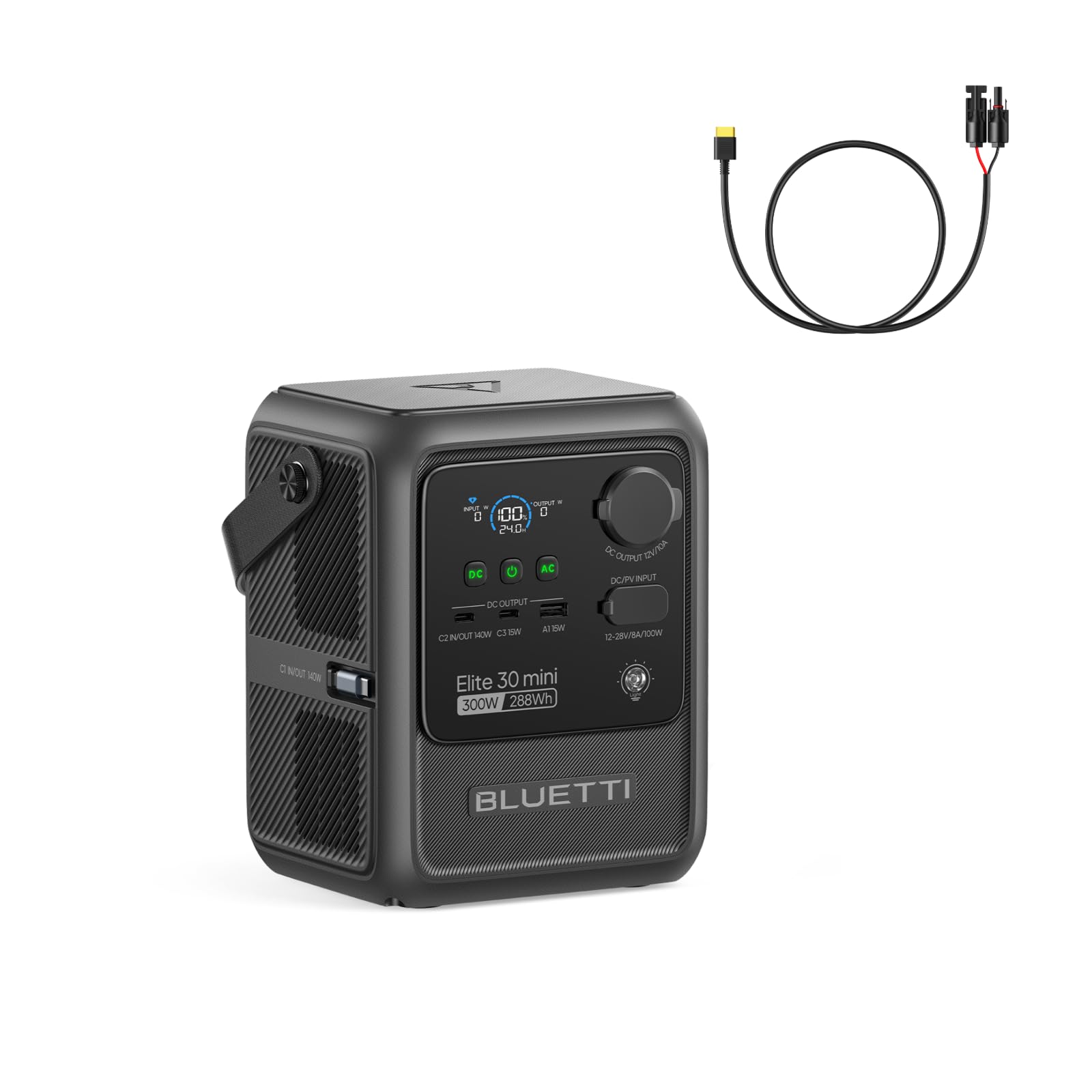
The Elite 30 mini is the lightest option in this group. It has a built-in retractable USB-C cable and a 300W rated output. It lists a 10ms or less UPS switchover, which makes it a fit for computers and routers during short outages.
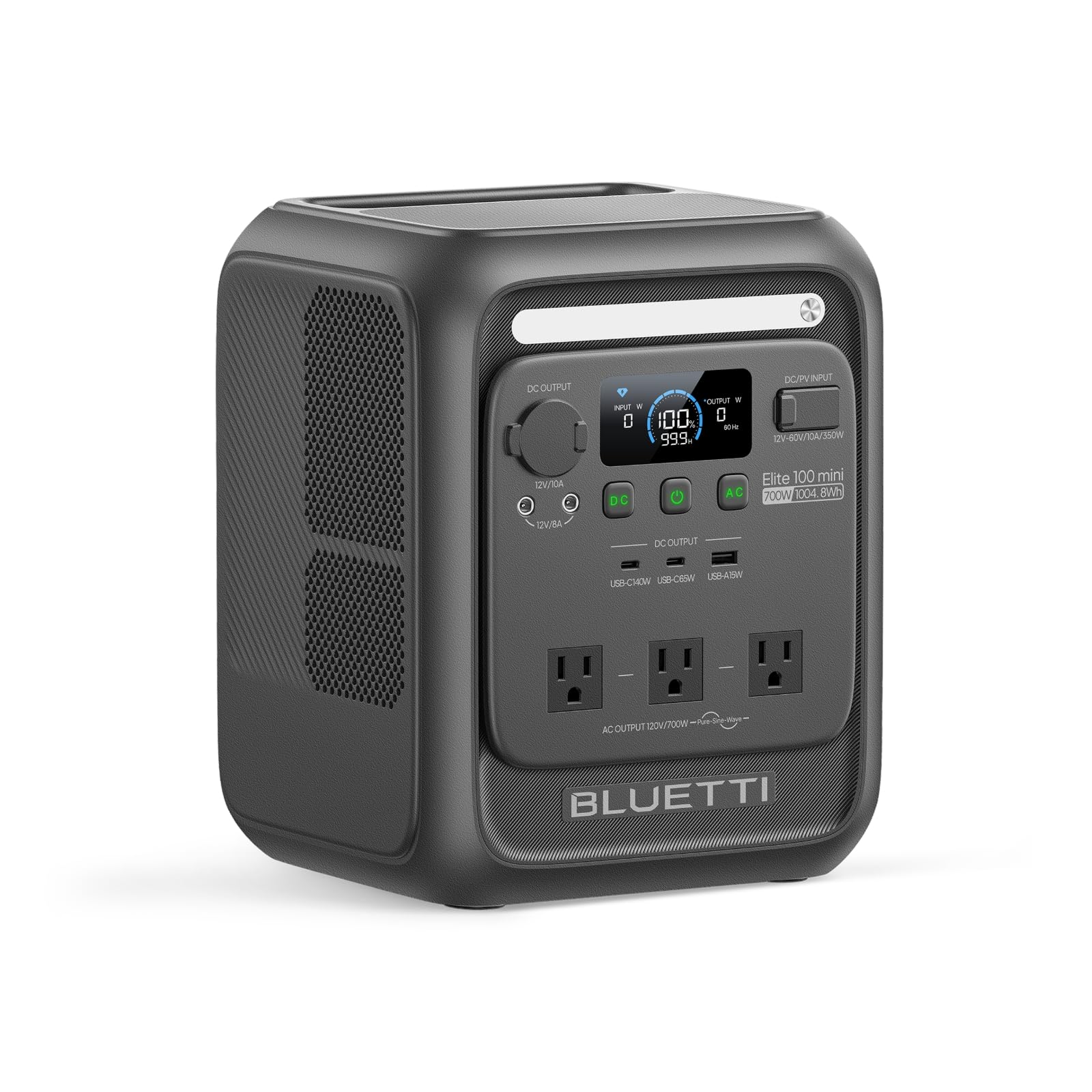
The Elite 100 mini offers more capacity in a small footprint. It has 1004.8Wh of capacity, a 700W AC output, and a 10ms UPS switchover. It also includes Bluetooth and Wi-Fi app control and LED lighting with SOS mode.
Mid-size picks for camping and home backup
If you want to run larger appliances or keep more devices going, a mid-size unit gives you more room to work with.
The Elite 100 V2 has 1024Wh of capacity and 1800W AC output, with 2700W lifting power. It weighs 25 lbs and has a concealed handle for one-handed carrying. It lists about 45 minutes to reach 80% charge and a noise level of 30 decibels.
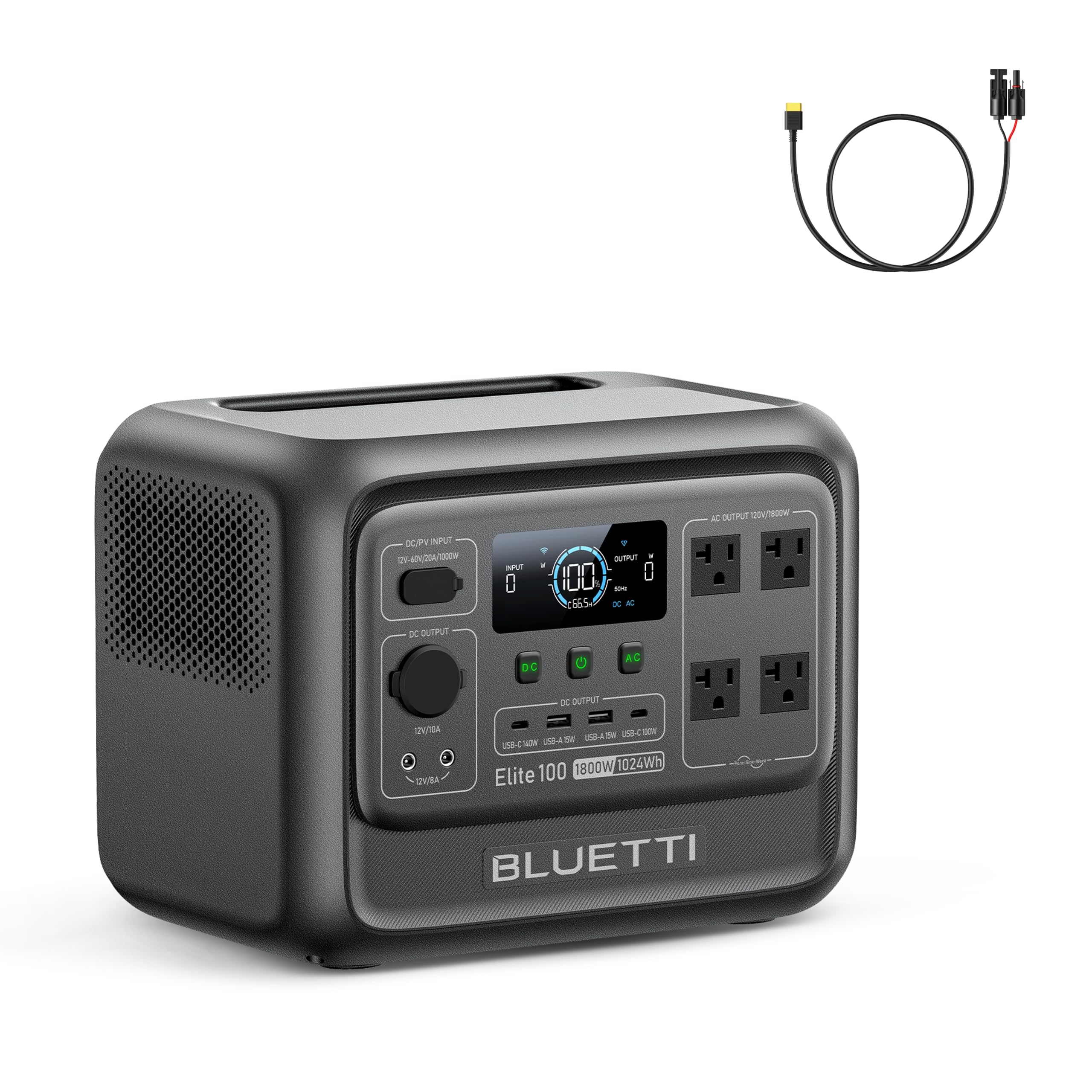
If you want a ready-to-go setup with solar, the Elite 100 V2 kit includes a 100W solar panel. The panel ships separately from the power station. The listing says the kit fully charges in about 7 hours.

Higher-capacity pick for longer runtimes
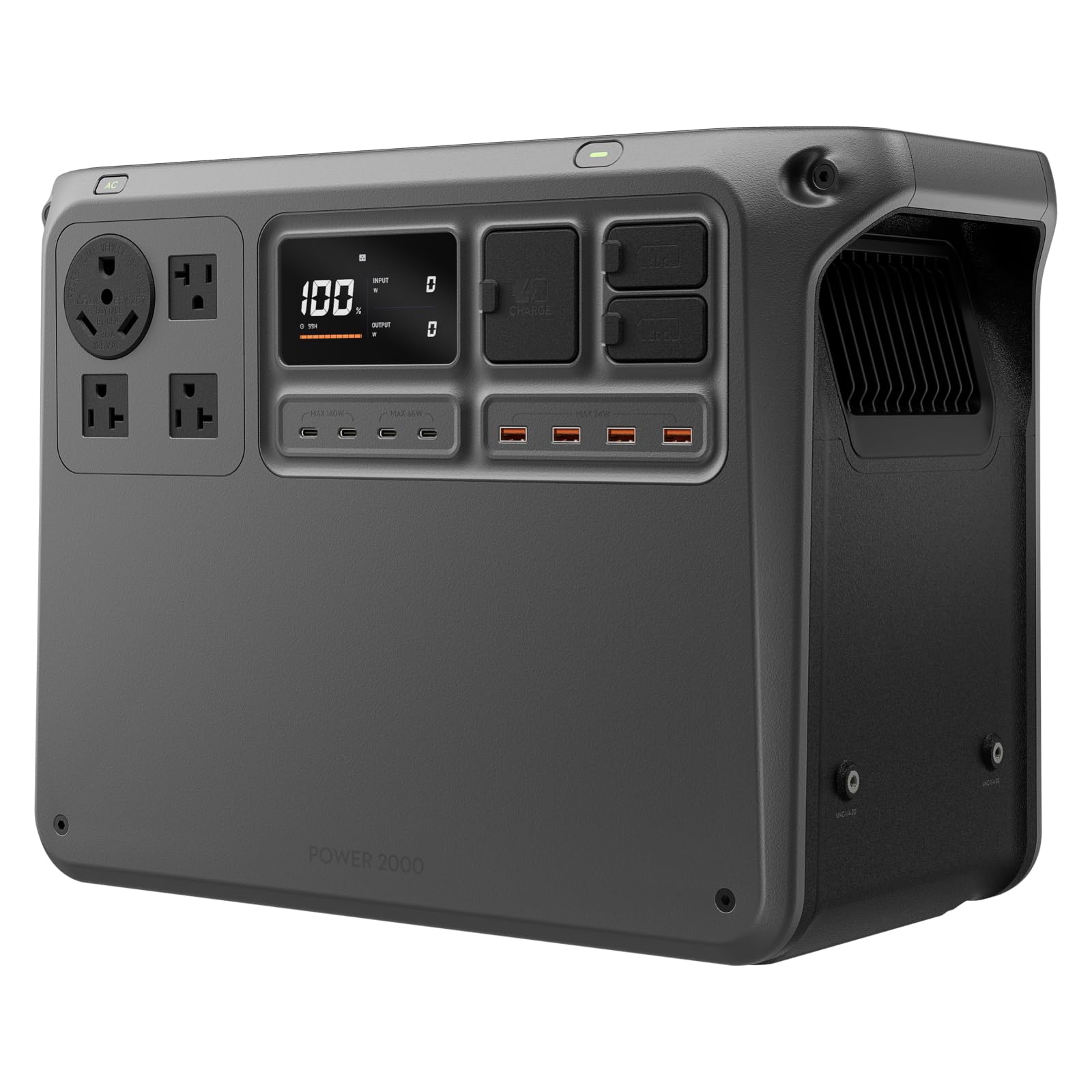
If you need more energy storage, the DJI Power 2000 has a 2048Wh LFP battery. The listing says it can run many common appliances, such as kettles, projectors and impact drills. It reaches 80% charge in about 55 minutes and lists a 10ms UPS switch time. It can also be expanded up to 22.5kWh with expansion batteries, which are sold separately.
Entry option with a 1000W max output
The DJI Power 500 has 512Wh of capacity and a 1000W max output. Its listing describes uses for home backup, camping and RVs, and it includes 70-minute fast charging.

Adding solar charging
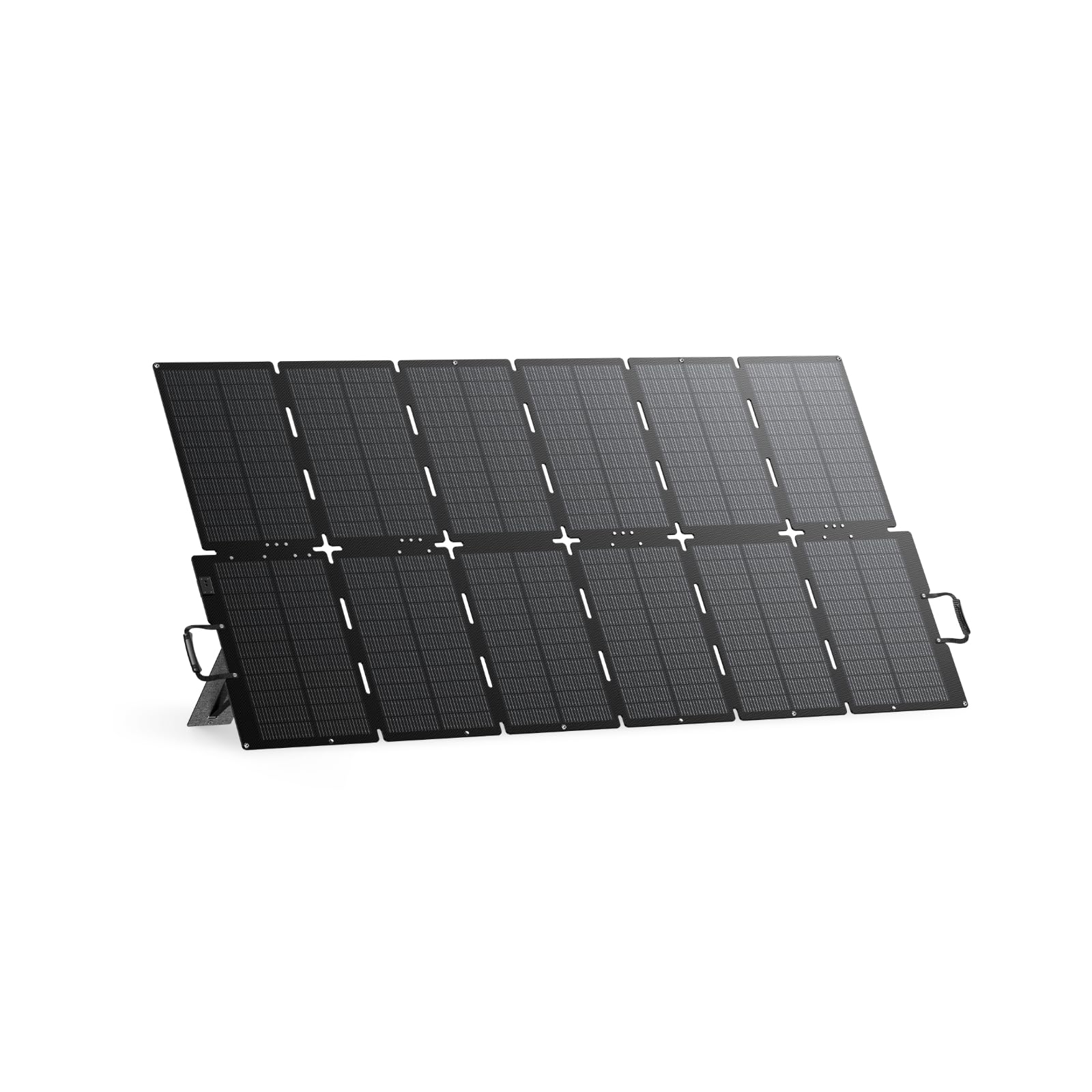
A solar panel can help recharge a power station when you are away from an outlet. The BLUETTI 500W Portable Solar Panel lists 25% conversion efficiency, an IP67 waterproof rating, and a weight of 28.4 lbs. It folds to 22.4" × 17.5" × 3.3" and includes a 1.5m MC4 to XT60 cable.
Before buying, check your power station's input voltage and connector type, since the listing notes that compatibility should be verified.
Get the best deals by email
New buying guides and the best live tech deals, in one short email.
As an Amazon Associate we earn from qualifying purchases. Prices shown on deal cards are as of the time listed on each card.